Hudson Hub Times

Hudson Fire Chief Bob Carter recently issued an apology on behalf of firefighters everywhere for the iconic image of a rescue worker pulling a victim from a burning building.
"We've done you a disservice if we've made you think we'll always be there to save you," Carter said at a Woman's Club of Hudson presentation during Fire Prevention Week in October.
"More than half of the people [who die in house fires] die before the fire department is notified."
The ownership is on you, Carter said, to prevent house fires and know how to escape if you ever face one.
Most fires are caused by carelessness or neglect, and therefore can be prevented by being more careful. "Predictable is preventable," Carter said.
Some of the more obvious ways to prevent and prepare for fires is to survey a home for fire hazards and to install and maintain smoke detectors.
Carelessly discarded smoking materials account for many fires, so smokers are advised to be careful when throwing out their cigarettes, cigars and matches.
SOME FIRE departments offer free home services where a firefighter will act as a home inspector and educate residents about fire hazards and how to correct them. Call your local department to see if they offer that service.
While getting educated about predictable fires was appreciated, what about seemingly unpredicable house fires?
I recently experienced an electrical house fire that I didn't see coming. The ceiling fan in my bathroom caught fire, ruining the bathroom and keeping my family out of the house and in a hotel for two months while repairs were being made.
The fire didn't spread very far. But that kind of experience makes you wonder, "How can I stop this from happening again?"
There are some ways to help prevent electrical fires, Carter said.
Make sure all home and kitchen appliances have UL (Underwriters' Laboratories Inc.) labels, or some other label from a testing agency that indicates the product has been tested for safety.
Homeowners also can check the U.S. Consumer Product Safety Commission Web site (CPSC.gov) to check to see if any of their appliances have been recalled.
"We've done you a disservice if we've made you think we'll always be there to save you," Carter said at a Woman's Club of Hudson presentation during Fire Prevention Week in October.
"More than half of the people [who die in house fires] die before the fire department is notified."
The ownership is on you, Carter said, to prevent house fires and know how to escape if you ever face one.
Most fires are caused by carelessness or neglect, and therefore can be prevented by being more careful. "Predictable is preventable," Carter said.
Some of the more obvious ways to prevent and prepare for fires is to survey a home for fire hazards and to install and maintain smoke detectors.
Carelessly discarded smoking materials account for many fires, so smokers are advised to be careful when throwing out their cigarettes, cigars and matches.
SOME FIRE departments offer free home services where a firefighter will act as a home inspector and educate residents about fire hazards and how to correct them. Call your local department to see if they offer that service.
While getting educated about predictable fires was appreciated, what about seemingly unpredicable house fires?
I recently experienced an electrical house fire that I didn't see coming. The ceiling fan in my bathroom caught fire, ruining the bathroom and keeping my family out of the house and in a hotel for two months while repairs were being made.
The fire didn't spread very far. But that kind of experience makes you wonder, "How can I stop this from happening again?"
There are some ways to help prevent electrical fires, Carter said.
Make sure all home and kitchen appliances have UL (Underwriters' Laboratories Inc.) labels, or some other label from a testing agency that indicates the product has been tested for safety.
Homeowners also can check the U.S. Consumer Product Safety Commission Web site (CPSC.gov) to check to see if any of their appliances have been recalled.
It is easy to overlook simple everyday kitchen appliances, so be sure to check all of them, including:
- Blenders
- Can Openers
- Coffee Filters & Carafes
- Coffee Grinders
- Coffee/Tea Makers
- Cookware & Gadgets
- Electric Kettles
- Fifth Burners
- Food Choppers
- Griddles
- Hand Blenders
- Hand Mixers
- Hot Pot
- Indoor Grills
- Juicers
- Knives
- Rice Cookers
- Roaster Ovens
- Sandwich Makers
- Skillets
- Slow Cookers
- Toaster Ovens
- Toasters
- Waffle Bakers
It is important to send back registration forms so you can receive recall announcements, Carter told members of the Woman's Club.
Members of the Hudson Fire Department frequently find recalled dehumidifiers or dishwashers when conducting home inspections, he added.
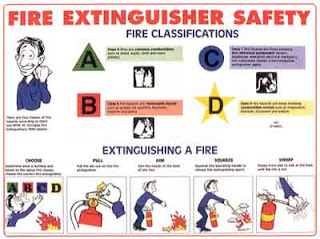
Some home fires are simply accidents that no one could predict. It is important to properly prepare for such emergencies by stocking the home with strategically located fire extinguishers and smoke detectors.
THE GOOD news about my house fire was that everybody got out safely. We called 9-1-1 before the smoke detectors went off and left before any amount of smoke filled the house.
We were waiting on the curb when the fire department arrived, which would have made Chief Carter happy.
However, he would not be happy to know that we had never practiced our escape route.
Residents should rehearse their escape plans, Carter said, and establish a meeting place outside. They should crawl to avoid smoke and make sure they have planned two escape routes from every room.
Some members of the Woman's Club were concerned about establishing a second escape route from a second floor room.
Carter suggested porch roofs could offer an escape path, and shrubs planted under a window could offer a softer spot to jump into. It also is important for residents to understand how to open the windows and possibly use professional fall protection equipment such as safety harnesses.
Chain and rope ladders are other possibilities, but they're not really easy to use, Carter said.
Whatever you pick as your secondary escape plan, make sure to rehearse, he said. The first time a fire forces you to use your escape route shouldn't be the first time you've ever tried it.
THE GOOD news about my house fire was that everybody got out safely. We called 9-1-1 before the smoke detectors went off and left before any amount of smoke filled the house.
We were waiting on the curb when the fire department arrived, which would have made Chief Carter happy.
However, he would not be happy to know that we had never practiced our escape route.
Residents should rehearse their escape plans, Carter said, and establish a meeting place outside. They should crawl to avoid smoke and make sure they have planned two escape routes from every room.
Some members of the Woman's Club were concerned about establishing a second escape route from a second floor room.
Carter suggested porch roofs could offer an escape path, and shrubs planted under a window could offer a softer spot to jump into. It also is important for residents to understand how to open the windows and possibly use professional fall protection equipment such as safety harnesses.
Chain and rope ladders are other possibilities, but they're not really easy to use, Carter said.
Whatever you pick as your secondary escape plan, make sure to rehearse, he said. The first time a fire forces you to use your escape route shouldn't be the first time you've ever tried it.